Astronomers traced the most distant fast radio burst ever to a tiny young galaxy
From the CosmechBytes archive. This brief ran before the desk went UAP-only in October 2026, when coverage was broader. It stays up for the record; current briefs live in Brief Bytes.
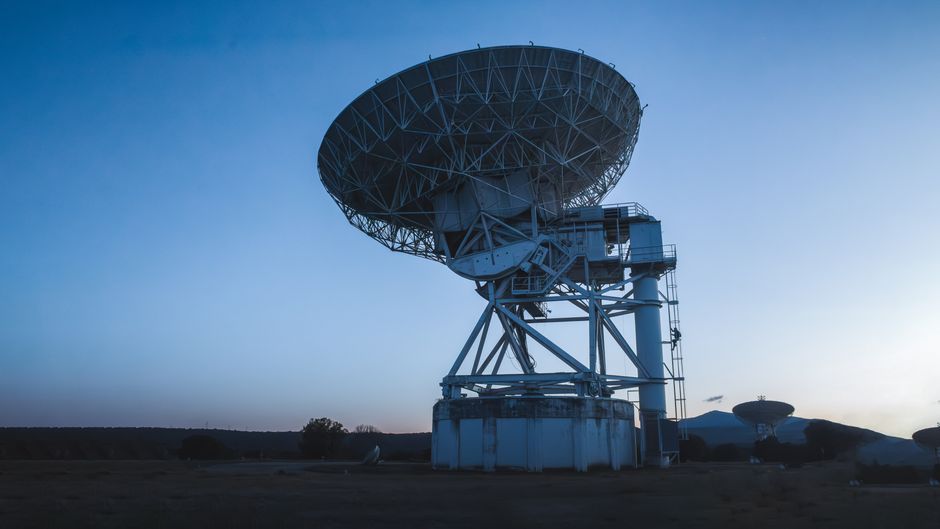
Image: Pexels via Pexels.
The briefing
Astronomers used the James Webb Space Telescope to pinpoint the host galaxy of FRB 20240304B, the most distant fast radio burst ever detected, sitting some 11 billion light years away. The find, published in Science this week, shows the burst came from a small dwarf galaxy forming stars furiously when the universe was just 3 billion years old.
Why it matters
Fast radio bursts remain unexplained: millisecond flashes releasing more energy than the Sun produces in a year, seen thousands of times since the first was accidentally discovered in 2007, with no confirmed origin. A young, star forming host favors the magnetar theory, where a freshly born, highly magnetic neutron star fires the burst soon after its creation. The burst also acts as a cosmic flashlight, its stretched signal probing the thin, invisible gas spread across roughly 80 percent of cosmic history.
Key details
- The MeerKAT telescope array in South Africa caught the burst on March 4, 2024. The way its radio signal stretched as it crossed intergalactic gas immediately suggested an extreme distance.
- Keck in Hawaii and the MMT Observatory in Arizona saw nothing at the burst's location, so the team used director's discretionary time on Webb. Its near infrared camera found a 28th magnitude dwarf galaxy, and the spectrograph measured a redshift of 2.15.
- The host galaxy is about 1,000 times less massive than astronomers expected, and it dates to cosmic noon, the era when star formation across the universe peaked. Manchester professor Ben Stappers said the host sticks out in the whole galaxy sample that we have.
- The burst was announced at a Montreal conference in July 2025 but stayed under embargo until the Science paper landed this week, nearly doubling the redshift reach of localized fast radio bursts.
- Study lead Manisha Caleb of the University of Sydney called it an extraordinary glimpse into the distant universe, noting that a merger origin looks very unlikely given the young host.
Was this helpful?
Reporting from Sky & Telescope, University of Manchester. Full stories at the sources below.
Read at Sky & Telescope Read at University of ManchesterGet Briefs by email
One tight email with the week's most important Brief Bytes on UAP and aliens. Read it in five minutes, know what mattered.