SETI Is Now Listening at the One Moment an Alien Civilization Would Pick to Call Earth
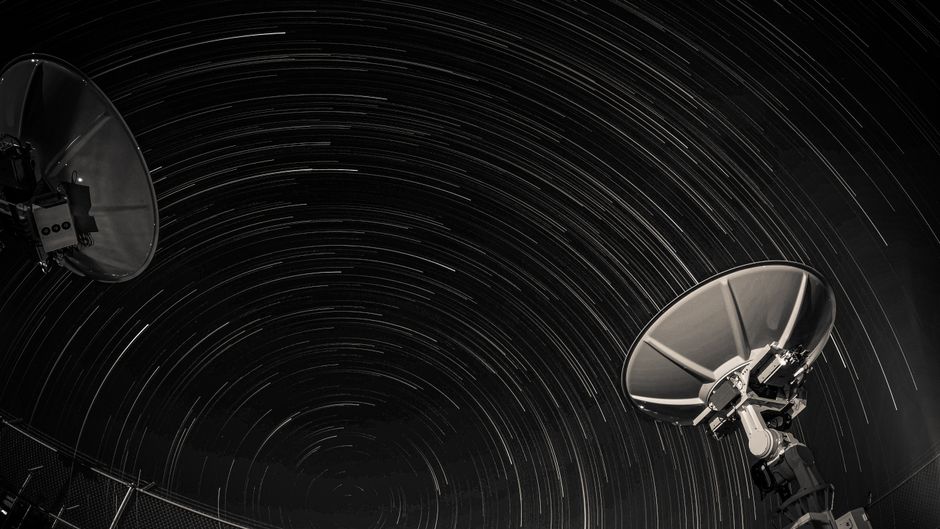
Image: Pexels via Pexels.
The briefing
Researchers at the SETI Institute have launched the first observational search of the anti-solar point, the spot in the sky directly opposite the Sun where a distant civilization watching Earth cross the Sun would appear at the midpoint of that transit. The team borrowed a game theory idea called a Schelling point, a choice two strangers can both arrive at without ever communicating, and turned it into an observing plan. If another civilization wanted to be heard without broadcasting forever in every direction, the midpoint of an Earth transit is the one moment both sides could pick on their own, according to the paper published in The Astronomical Journal.
The search runs on the Allen Telescope Array at the Hat Creek Radio Observatory in Northern California, an instrument built for radio SETI work. Because the anti-solar point moves against the background stars as Earth orbits, the team observes two to three nights each week and expects to need about four years to cover every important position along Earth orbit. Universe Today describes the effort, called ATA ASP, as the largest campaign the array has undertaken, and notes the survey idea was first proposed decades ago and has only now been put to an observational test.
A pilot run came first. Over three nights in the summer of 2023, twenty antennas collected about 17 hours of observations and 32 terabytes of data, turning up roughly 1.9 million radio signal detections. After filtering, every one of them traced back to interference from human technology, the SETI Institute says. The pilot still set the first observational limits for a transmitter using this strategy, sensitive enough under its stated assumptions to catch a signal comparable in power to the former Arecibo planetary radar out to about 124 light years. The full campaign has since added more than 121 nights of observations, with first year results still to come in a future publication.
Why it matters
Most SETI work asks where to look. This campaign asks when, and that shift matters because a civilization with limited power cannot shout in all directions at all times. A sender that wants to be found has to guess when the receiver is listening, and the transit midpoint is a guess both sides can make from the same astronomy. As co lead author Dr. Sofia Sheikh of the SETI Institute put it, the challenge is figuring out where and when another civilization might choose to transmit, and the anti-solar point lets researchers think about the problem from the perspective of a potential sender rather than just the receiver.
The idea on trial here is a theory, and the brief record should say so plainly. Nothing in the pilot data points to extraterrestrial technology, and the team does not claim otherwise. What the campaign produces either way is a map of a part of the search space nobody had checked before, built with an automated pipeline called ATSAT that filters hundreds of millions of interference signals down to a set small enough for researchers to review by hand. If a technosignature ever does surface in data like this, it will be because a search was listening in the right place at the moment a sender would have chosen.
Key details
- The anti-solar point is the direction opposite the Sun from Earth. A civilization on that line could watch Earth transit the Sun, and the midpoint of that transit is the shared moment the survey is built around.
- The strategy rests on the Schelling point concept from game theory, a choice two parties can both select independently when they need to coordinate without communicating, applied here to interstellar contact.
- The paper, A Large Scale Technosignature Survey of the Anti Solar Point with the Allen Telescope Array, appeared in The Astronomical Journal. Authors include Sofia Z. Sheikh of the SETI Institute and Isabel Gerrard of Breakthrough Listen at the University of Oxford.
- Pilot observations in the summer of 2023 used 20 antennas for about 17 hours, produced 32 terabytes of data and about 1.9 million signal detections, and every detection was explained as human radio interference, according to the SETI Institute.
- The pilot set the first limits for this strategy, with sensitivity under stated assumptions reaching a transmitter comparable to the former Arecibo planetary radar at up to about 124 light years.
- The full survey observes two to three nights each week over about four years, has logged more than 121 nights since the pilot, and uses the ATSAT pipeline to filter interference before human review.
Was this helpful?
Reporting from SETI Institute, Universe Today. Full stories at the sources below.
Read at SETI Institute Read at Universe TodayGet Briefs by email
One tight email with the week's most important Brief Bytes on UAP and aliens. Read it in five minutes, know what mattered.