SpaceX pulls off three launches in 13 hours as Rocket Lab lands its biggest deal
From the CosmechBytes archive. This brief ran before the desk went UAP-only in October 2026, when coverage was broader. It stays up for the record; current briefs live in Brief Bytes.
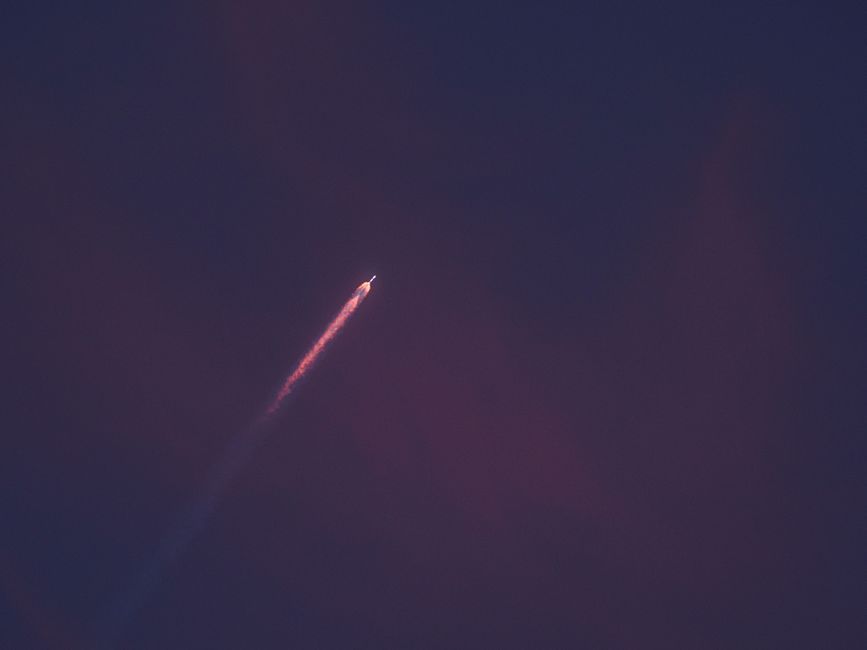
Image: Pexels via Pexels.
The briefing
SpaceX crammed two Falcon 9 launches and a Falcon Heavy mission into less than 13 hours on Thursday, one of the busiest days in the company's history. The day began with the Crew 13 mission, a Falcon 9 carrying a four person crew to the International Space Station, including commander Jessica Watkins, the first Black woman to lead a mission into space. Hours later a second Falcon 9 lifted off from Vandenberg with the Transporter 18 rideshare carrying 130 payloads. The night ended with a Falcon Heavy launching a classified payload for the National Reconnaissance Office, the first time the rocket has flown for the spy satellite agency. SpaceX recovered all four flown boosters. The same week brought Starship's first technically orbital flight, which deployed the first 26 next generation Starlink V3 satellites, and Rocket Lab signed what it calls its largest Electron launch agreement yet, a 20 mission deal with the Japanese radar imaging company Synspective, extending their total bookings to 47 launches.
Why it matters
The cadence is the story. A company that once celebrated landing a single booster now treats three launches and four landings in one day as routine. Meanwhile Rocket Lab's 20 mission deal shows the small launch market is alive on loyalty and precision. Synspective has flown 13 StriX radar satellites on Electron since 2020, and the new deal more than triples its outstanding bookings. And Blue Origin wants in on the scale game, asking the FAA to raise New Glenn's allowed launch rate at Cape Canaveral from 12 to 50 per year as it rebuilds its pad after May's explosion. CEO Dave Limp still says the company could return to flight by the end of 2026.
Key details
- Crew 13 departed Space Launch Complex 40 at Cape Canaveral at 11:10 am EDT Thursday and docked with the station Thursday evening. It is SpaceX's 21st human spaceflight.
- Transporter 18 carried customers ranging from Google to startups like Starfish Space and remote sensing firms Planet Labs and ICEYE.
- The Falcon Heavy NRO payload flew into a highly inclined orbit northeast from Florida's Space Coast.
- Starship's 14th test flight was cut from a planned 10 hours to three after a Raptor engine failure during ascent, but the ship still made a pinpoint splashdown at a backup site north of Hawaii.
- The Rocket Lab deal was first reported by Aviation Week & Space Technology. Synspective's most recent Electron launch was September 25.
- Blue Origin's FAA proposal also covers 50 first stage landings on an ocean drone ship, up to 100 static fire tests, and payload fairing recovery.
Was this helpful?
Reporting from Ars Technica, Advanced Television. Full stories at the sources below.
Read at Ars Technica Read at Advanced TelevisionGet Briefs by email
One tight email with the week's most important Brief Bytes on UAP and aliens. Read it in five minutes, know what mattered.