NASA Briefs Its Hand in Japan's Bold Plan to Steal a Piece of a Martian Moon
From the CosmechBytes archive. This brief ran before the desk went UAP-only in October 2026, when coverage was broader. It stays up for the record; current briefs live in Brief Bytes.
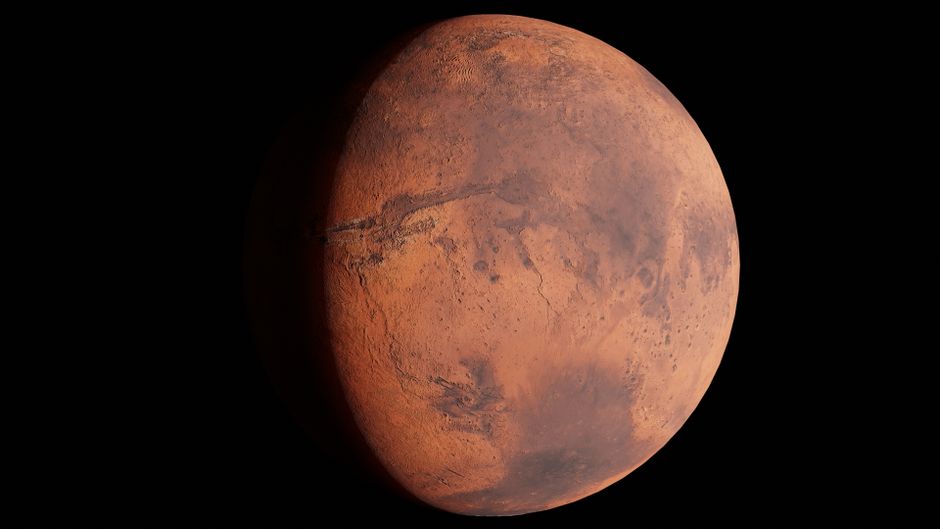
Image: Pexels via Pexels.
The briefing
NASA will hold a media teleconference at 4 p.m. EDT on Thursday, October 15, to preview its contributions to JAXA's Martian Moons eXploration mission, which launches from Tanegashima Space Center on October 19 EDT (October 20 in Japan). The mission will survey Mars's moons Phobos and Deimos, touch down on Phobos, and haul a surface sample home to Earth in 2031. NASA is supplying the spectrometer that will read the moon's chemistry, the sampler that will grab the soil, and the Deep Space Network links that will talk to the craft.
Why it matters
No spacecraft has ever landed on either of Mars's moons, and Phobos may be a captured asteroid, a chunk of blasted-off Mars, or something stranger still. The answer is written in its soil, and a sample return is the only way to read it with laboratory instruments too heavy to fly. MMX is the largest international planetary mission Japan has ever led, and it arrives as China readies its own Mars sample return around 2028, turning the next decade into a head to head contest over the Martian neighborhood.
Key details
- The MMX spacecraft launches October 19 EDT from JAXA's Tanegashima Space Center, with a backup window running October 21 through November 7, according to NASA and JAXA reporting.
- The craft reaches Mars in August 2027, surveys Phobos for about a year, collects surface material no earlier than December 2028, and delivers the sample to Earth in 2031, according to NASA.
- NASA's contributions include the MEGANE gamma-ray and neutron spectrometer, developed by Johns Hopkins Applied Physics Laboratory with Lawrence Livermore National Laboratory, and a pneumatic sampler built by Honeybee Robotics, a Blue Origin company, according to NASA.
- MEGANE, pronounced meh-GAH-nay after the Japanese word for eyeglasses, was delivered to JAXA in March 2024 after a six-year development, according to reporting on the mission.
- The spacecraft will also deploy IDEFIX, a small French and German built rover based on the MASCOT rover that rode with Hayabusa2 to the asteroid Ryugu, intended to operate on Phobos for at least 100 days, according to the Planetary Society.
- Phobos measures roughly 22 kilometers across and orbits just 6,000 kilometers above Mars, more than 60 times closer than the Moon is to Earth, which makes the rendezvous one of the trickiest orbital maneuvers ever attempted, according to the Planetary Society.
Was this helpful?
Reporting from NASA, The Planetary Society, The Vanguard USA. Full stories at the sources below.
Read at NASA Read at The Planetary Society Read at The Vanguard USAGet Briefs by email
One tight email with the week's most important Brief Bytes on UAP and aliens. Read it in five minutes, know what mattered.