NASA's shoebox satellite will test two engines on a single tank of fuel
From the CosmechBytes archive. This brief ran before the desk went UAP-only in October 2026, when coverage was broader. It stays up for the record; current briefs live in Brief Bytes.
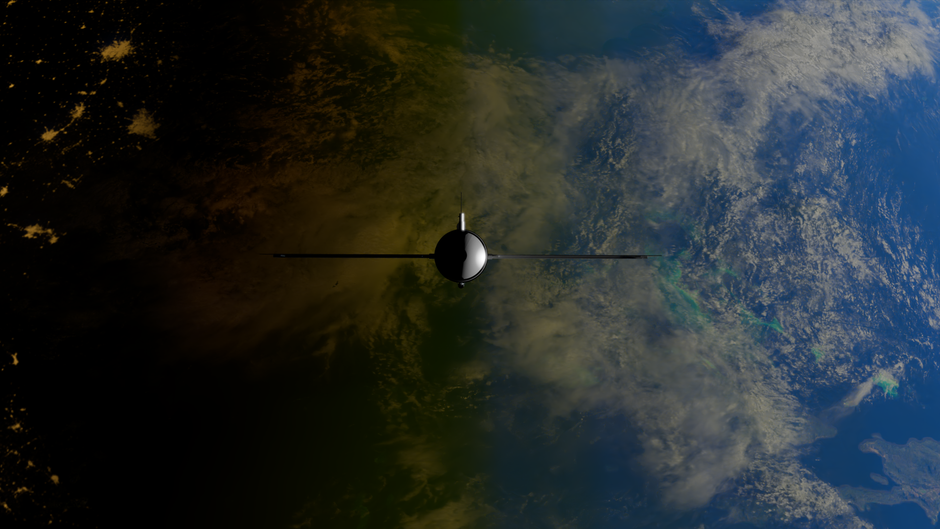
Image: Zelch Csaba via Pexels.
The briefing
Engineers at NASA's Marshall Space Flight Center in Huntsville, Alabama have finished environmental and physical testing on the ASCENT Propulsion Dual Mode mission, a CubeSat about the size of a large shoebox. It will fly a single integrated propulsion system fed by one tank of the non toxic ASCENT propellant, powering both a high thrust chemical engine and low thrust electrospray thrusters. The mission is manifested to launch no earlier than October 1 aboard a SpaceX Falcon 9 rocket from Vandenberg Space Force Base in California.
Why it matters
Spacecraft today carry two separate propulsion systems, one for rapid moves like entering orbit and one for slow efficient maneuvers like holding position, each with its own tanks and heavy plumbing. That eats space and mass that could otherwise go to science. If one tank can feed both engine types safely, future small missions get more room for instruments and can launch on smaller, cheaper rockets. The spacecraft will spend nine months in an orbit about 325 miles up, alternating between chemical and electric maneuvers to prove the dual mode concept actually works in space.
Key details
- ASCENT stands for Advanced Spacecraft Energetic Non-Toxic, a safer propellant meant to replace volatile conventional fuels.
- The electrospray thrusters were developed by the Massachusetts Institute of Technology, the chemical module by Plasma Processes, and the spacecraft bus integrated by the Georgia Institute of Technology; Marshall manages the mission.
- Ground testing included a pressurized helium leak test inside a vacuum chamber, thermal vacuum testing in simulated space conditions, and a spin test to validate mass properties and center of gravity.
- After deployment, the operations team will run short chemical and electric maneuvers, then several months of orbit raising and lowering flights.
- Project manager Nehemiah Williams of NASA Marshall said ensuring the propulsion system works across all the teams is what makes the mission successful.
- The mission is managed and funded by NASA's Small Spacecraft and Distributed Systems group.
Was this helpful?
Reporting from NASA. Full stories at the sources below.
Read at NASAGet Briefs by email
One tight email with the week's most important Brief Bytes on UAP and aliens. Read it in five minutes, know what mattered.