The AI money is moving from training models to running them
From the CosmechBytes archive. This brief ran before the desk went UAP-only in October 2026, when coverage was broader. It stays up for the record; current briefs live in Brief Bytes.
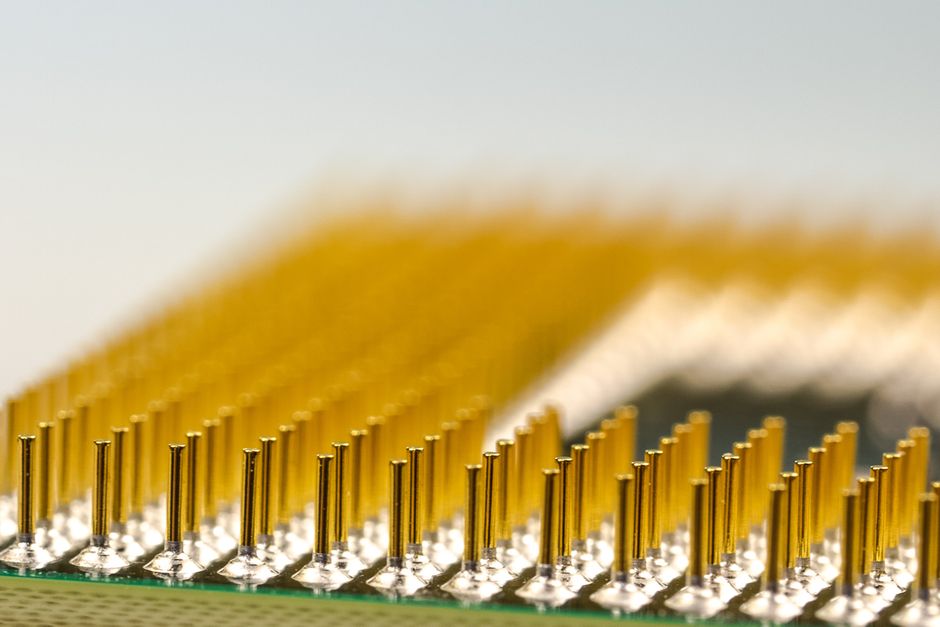
Image: Pixabay via Pexels.
The briefing
For years AI development revolved around training ever larger models, and that strategy paid off: the largest GPT-3 from 2020 answered 43.9 percent of a popular knowledge and reasoning benchmark, while GPT-4o reached 88.7 percent four years later, effectively matching human experts. In 2026, though, the center of gravity has shifted to inference, the act of actually running trained models to answer questions, write code, and carry out tasks. Reasoning models that re-prompt themselves and agents that work around the clock have exploded demand, and Nvidia CEO Jensen Huang called this moment the inflection point of inference at the company's GTC 2026 conference. As Moor Insights and Strategy analyst Matt Kimball put it, training is yesterday's news; all any chief information officer wants to talk about is inference.
Why it matters
Training and inference are computationally different problems, and that is forcing a hardware rethink. Inference is bottlenecked by memory bandwidth rather than raw compute, with researchers finding that Nvidia H100 GPUs running open source LLMs sit idle 50 to 80 percent of the time waiting for data. The scramble for better inference hardware is producing unlikely alliances: OpenAI and Amazon have deployed dinner plate size chips designed by Cerebras despite Amazon owning its own Trainium line, Nvidia paid 20 billion dollars for Groq's talent and intellectual property and unveiled the Groq 3 language processing unit, and Anthropic is paying SpaceXAI over a billion dollars per month to lease spare compute. Whoever owns the cheapest way to run a model may matter more than whoever trains the best one.
Key details
- Reasoning models can produce up to 20 times as much text as low effort models, and agentic AI now runs inference around the clock toward user defined goals.
- Nvidia bought Groq talent and IP at the end of 2025 and unveiled the Nvidia Groq 3 language processing unit at GTC 2026; the chip has 500 MB of on die SRAM and seven times the memory bandwidth of the company's GPUs.
- Amazon pairs its Trainium accelerator with Cerebras Wafer-Scale Engine 3, which keeps memory and compute side by side on a full silicon wafer.
- d-Matrix stacks an AI accelerator directly on a DRAM die to shrink the distance data travels to micrometers, while Majestic Labs built a memory interface that can support up to 128 terabytes of DRAM in a single rack.
- Memory analyst Jim Handy notes HBM costs two to three times as much as ordinary DRAM, which is why challengers are betting on commodity memory.
- SK Hynix says HBM4, now in production for Nvidia's Vera Rubin GPU expected in the second half of 2026, will double HBM's maximum memory bandwidth.
Was this helpful?
Reporting from IEEE Spectrum. Full stories at the sources below.
Read at IEEE SpectrumGet Briefs by email
One tight email with the week's most important Brief Bytes on UAP and aliens. Read it in five minutes, know what mattered.