Astronomers Just Heard an Exoplanet for the First Time, and It Is Not Aliens
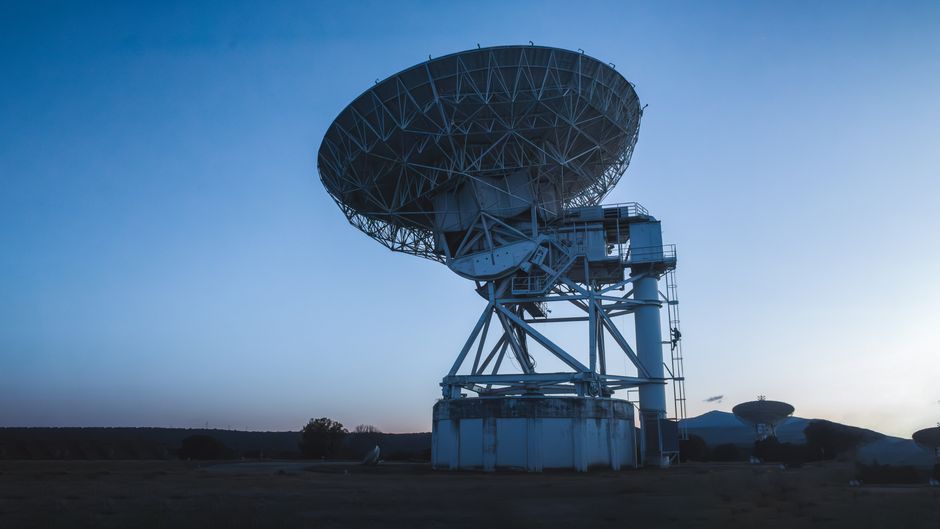
Image: Pexels via Pexels.
The briefing
Astronomers have directly detected radio waves coming from a planet outside our solar system for the first time. The signal from Beta Pictoris b, a gas giant about 12 times the mass of Jupiter located 63 light years away, is not a message. It is the crackle of a colossal magnetic field driving auroras hundreds of times more powerful than Jupiter's. Harvard astronomer Edo Berger, a coauthor on the study, said it plainly: he knows radio signals are associated with searches for extraterrestrial intelligence, but this is something very different.
Why it matters
Magnetic fields are the shields that let planets keep their atmospheres, and until now they were invisible outside our solar system. More than 6,000 exoplanets have been found, but astronomers could say almost nothing about most of them beyond mass and radius. If radio auroras can reveal magnetic fields, the same technique could one day probe the interiors of distant worlds and give the search for habitable planets a new diagnostic. It also matters what this is not: a natural signal this loud is exactly the kind of thing future alien hunters will have to distinguish from the real thing.
Key details
- A team led by Kevin Ortiz Ceballos of the Center for Astrophysics, Harvard and Smithsonian used the 64 dish MeerKAT array in South Africa to catch repeating, strongly polarized radio bursts from Beta Pictoris b.
- The bursts are auroral radio emission, the same physics behind the northern lights and Jupiter's radio storms, amplified by a magnetic field the team estimates at roughly 200 times stronger than Jupiter's.
- Pinpointing the signal to the planet rather than its host star is what makes this a first. Earlier hints of exoplanet radio emissions could never rule out the star as the source.
- The findings are a preprint posted to arXiv on September 15 and have not yet passed peer review. Independent radio astronomers call the detection promising but want to see a regular pattern before calling it confirmed.
Was this helpful?
Reporting from CNN, Smithsonian Magazine. Full stories at the sources below.
Read at CNN Read at Smithsonian MagazineGet Briefs by email
One tight email with the week's most important Brief Bytes on UAP and aliens. Read it in five minutes, know what mattered.