The roboticist who wants machines to grow like plants
From the CosmechBytes archive. This brief ran before the desk went UAP-only in October 2026, when coverage was broader. It stays up for the record; current briefs live in Brief Bytes.
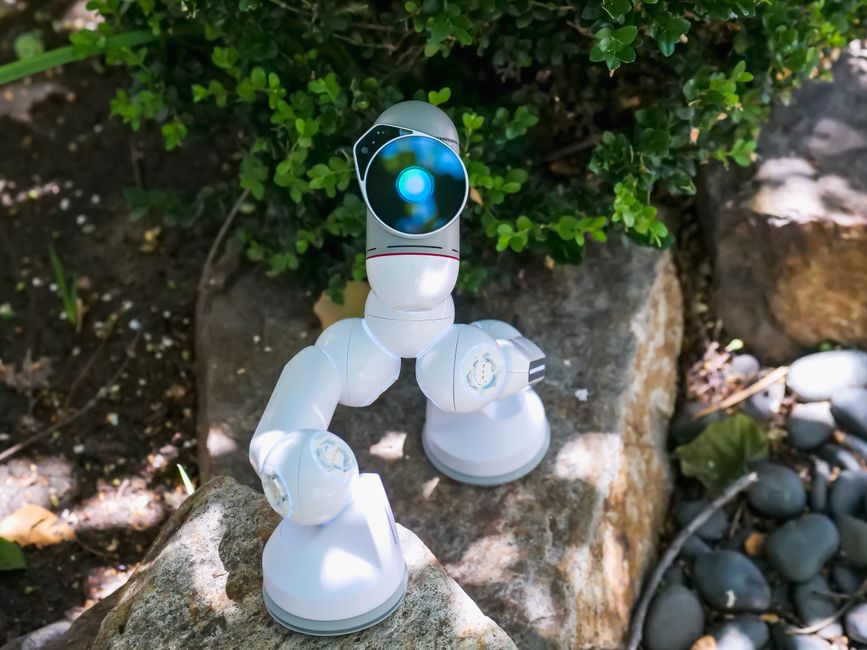
Image: Kindel Media via Pexels.
The briefing
Barbara Mazzolai, associate director for robotics at the Italian Institute of Technology in Genoa, has spent her career borrowing engineering ideas from nature. She helped design an octopus inspired soft robot, then moved beyond animals entirely to build robots modeled on plants, including one that burrows through soil by growing only at its tip. Now she wants the whole field to face its environmental footprint: in a manifesto published in Nature Machine Intelligence in July, she and collaborators proposed a new research field called sustainability robotics.
Why it matters
Mazzolai argues that technologies like plastics and car batteries were built with little thought for end of life, and robotics should not follow that path. Sustainability robotics rests on three pillars: robots with minimal environmental impact, robots available to people across the world and all socioeconomic backgrounds, and robots that are symbiotic, benefiting both humans and nature. In practice that means designing the full life cycle up front, so machines can be reused, recycled, or even biodegraded when their useful life ends. She is confident the ingredients exist and that younger roboticists want this future: they want to develop something that can help.
Key details
- Mazzolai trained as a biologist at the University of Pisa, moved into robotics in 1999 under Paolo Dario, and earned her PhD in microsystems engineering from Tor Vergata University of Rome in 2011.
- Her root inspired robot uses a miniaturized 3D printer at its tip to build a snakelike body behind it, cutting the energy needed to push through soil; the tip carries sensors for obstacles, nutrients, and water.
- On working across disciplines: bioinspired robotics sometimes requires two separate brains, one of a biologist and one of an engineer.
- She traces her fascination with the living world to childhood on Italy's Tuscan coast near Livorno, where her mycologist father led family forest expeditions.
- On the new field: we need to reduce the footprint of our technology, she says. It is really about thinking in a different way to open new possibilities for robotics and for society.
- Her stance on imitation: it is not a copy of natural organisms, because a living organism is both difficult to replicate and has different goals.
Was this helpful?
Reporting from IEEE Spectrum. Full stories at the sources below.
Read at IEEE SpectrumGet Briefs by email
One tight email with the week's most important Brief Bytes on UAP and aliens. Read it in five minutes, know what mattered.