Army Expects Some Impact as the Critical Minerals Deadline Closes In
From the CosmechBytes archive. This brief ran before the desk went UAP-only in October 2026, when coverage was broader. It stays up for the record; current briefs live in Brief Bytes.
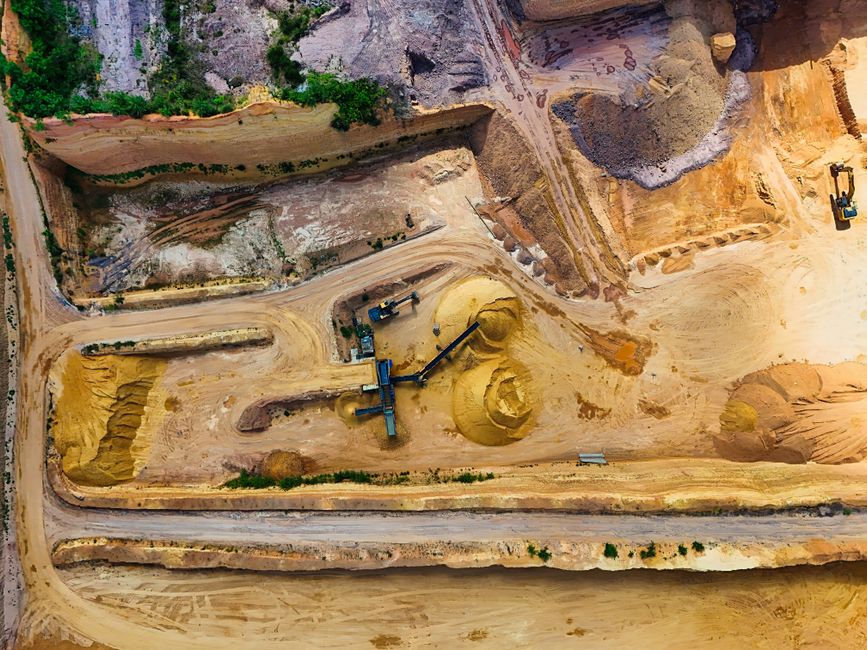
Image: Pexels via Pexels.
The briefing
The Army expects disruption come January, when defense companies lose routine waivers that let them use critical minerals sourced from China, Russia, Iran and North Korea. Liz Miranda, executive deputy to the commanding general of Army Materiel Command, told the Association of the United States Army conference this week that mapping supply chains down to the raw material level is no easy task and that the service is not there yet. She does not expect a catastrophic cliff, but she does expect impact.
Why it matters
Modern weapons run on materials the United States largely does not process at home. Tungsten alloys go into engine components and hypersonics, and germanium goes into thermal imaging systems, with China the dominant producer of both, according to an Aerospace Industries Association report cited by Breaking Defense. That report found significant domestic processing, refining and magnet production capacity for aerospace grade materials is not expected until 2028 or later. The January deadline therefore lands at least a year before the replacement supply does, and the waiver rules decide how painful that gap becomes.
Key details
- Executive Order 14415, signed July 20, 2026, directs the services to stop issuing waivers under 10 U.S.C. 4872 for covered materials from covered countries starting January 1, 2027, according to an Orrick analysis published by JD Supra.
- After that date a waiver requires a formal mitigation plan accepted by the government, identifying the source of the noncompliant material, documenting exhaustive efforts to find compliant material, and setting out steps and a strict timeline to remove it, according to JD Supra.
- Miranda told the AUSA audience the Army is working toward compliance but is not there yet, and she expects some impact in January rather than an off the cliff outcome, according to Breaking Defense.
- The Aerospace Industries Association argued in its September report that waivers will still be necessary for years after the deadline because current domestic supply cannot meet industry needs, according to Breaking Defense.
- Miranda pointed to a manufacturing rodeo the Army announced this week, meant to expose supply chain and manufacturing risks the service may not know it has, with a focus on what domestic capability exists and where allies can fill gaps, according to Breaking Defense.
- Assistant Secretary of Defense Michael Cadenazzi told Breaking Defense in July that the Pentagon would work with companies that need waivers provided they show a good faith effort and a plan to close the gap through domestic or allied sourcing.
Was this helpful?
Reporting from Breaking Defense, JD Supra. Full stories at the sources below.
Read at Breaking Defense Read at JD SupraGet Briefs by email
One tight email with the week's most important Brief Bytes on UAP and aliens. Read it in five minutes, know what mattered.